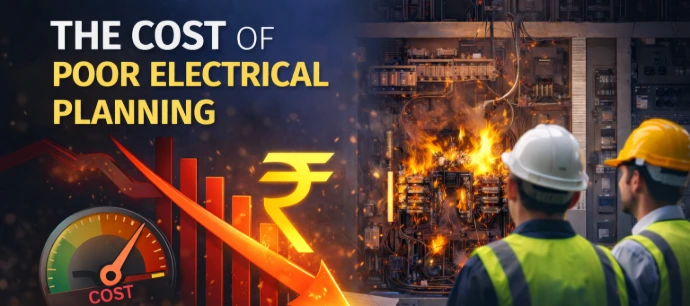
Many industrial failures originate from poorly designed or overloaded electrical systems.
Unplanned electrical failures can result in production loss, damaged machinery, and reputational risk.
Introduction
In modern industrial environments, electrical infrastructure is the backbone of productivity. Every machine, control panel, automation system, and safety mechanism depends on stable and properly engineered power distribution.
Yet many industrial failures trace back to one root cause — poor electrical planning.
When electrical systems are poorly designed, overloaded, or installed without structured engineering analysis, the consequences extend far beyond wiring issues. They impact production efficiency, financial performance, safety standards, and long-term business credibility.
This article explores the hidden and visible costs of inadequate electrical planning — and why structured engineering is essential for sustainable industrial growth.
Understanding Poor Electrical Planning
Poor electrical planning typically includes:
Incorrect load calculations
Improper cable sizing
Overloaded distribution boards
Inadequate earthing systems
Lack of protection coordination
No future expansion consideration
Non-compliance with safety standards
In many cases, systems may appear functional during initial operation. However, as production load increases, hidden design flaws begin to surface.
Electrical infrastructure must be engineered — not improvised.
Frequent Tripping & Voltage Fluctuations
One of the earliest signs of poor planning is repeated breaker tripping and unstable voltage supply.
Causes include:
Load imbalance across phases
Undersized breakers
Overloaded circuits
Poor quality connections
Voltage fluctuations can severely affect PLC systems, drives, sensors, and automated equipment. Over time, this leads to operational instability and rising maintenance complaints.
Frequent tripping is not just inconvenience — it is a warning sign of deeper design issues.
Equipment Overheating & Reduced Lifespan
Improper cable sizing and overloaded circuits generate excessive heat. Heat buildup accelerates:
Insulation degradation
Panel component wear
Terminal loosening
Internal wiring damage
Overheating shortens equipment lifespan and increases replacement frequency. Instead of achieving long-term asset reliability, industries face recurring repair cycles.
Electrical stress silently reduces machine durability.
Unexpected Downtime & Production Loss
Unplanned electrical failures often occur during peak production hours.
Consequences include:
Complete production line shutdown
Restart delays
Process recalibration
Raw material waste
Missed dispatch deadlines
Even short downtime events can cause significant daily output loss. Repeated disruptions multiply the financial impact over months and years.
Downtime is one of the most expensive outcomes of poor planning.
Increased Maintenance Costs
Reactive maintenance becomes routine in poorly designed systems.
Industries experience:
Frequent breaker replacements
Cable joint repairs
Panel modifications
Emergency electrician visits
Higher spare part inventory
Instead of planned preventive maintenance, organizations shift into crisis response mode — increasing operational stress and cost.
Emergency repairs are always more expensive than preventive design.
Safety Hazards & Compliance Risks
Electrical systems that lack proper engineering oversight create serious safety risks:
Short circuits
Electrical fires
Arc flash incidents
Electric shock hazards
Inadequate grounding protection
Beyond operational damage, safety incidents can cause injury, legal liability, insurance complications, and regulatory penalties.
Electrical safety is not optional — it is a responsibility toward people and assets.
Financial & Reputational Impact
The financial burden of poor electrical planning includes:
Production loss
Equipment replacement
Energy inefficiency
Overtime labor cost
Emergency service charges
However, the long-term damage goes deeper.
Repeated operational instability affects:
Customer trust
Delivery reliability
Brand reputation
Competitive positioning
Industries known for frequent breakdowns struggle to maintain long-term contracts and credibility.
The Importance of Structured Electrical Engineering
A professionally engineered electrical system includes:
✔ Accurate load calculation and demand analysis
✔ Proper cable sizing and routing
✔ Balanced distribution system design
✔ Coordinated protection devices
✔ Effective earthing and grounding
✔ Scalability planning for future expansion
✔ Compliance with industrial safety standards
Structured execution ensures reliability, efficiency, and long-term performance stability.
Engineering foresight prevents operational regret.
Preventive Strategy: Investing in Stability
Industries that prioritize electrical planning focus on:
Professional system design before installation
Periodic load evaluation
Thermal scanning inspections
Preventive maintenance schedules
Backup power integration
Smart monitoring systems
Preventive action reduces risk, lowers long-term cost, and increases operational confidence.
Conclusion
Poor electrical planning does not only create technical failures — it creates financial loss, safety hazards, operational instability, and reputational damage.
Reliable electrical infrastructure is a strategic investment. It protects production continuity, extends equipment life, ensures compliance, and strengthens industrial credibility.
Industries that engineer their power systems with precision build a foundation for sustainable growth.
At GGS Engineering Service, we believe electrical systems should empower industries — not restrict them.
Reliable Power. Structured Execution. Long-Term Performance.