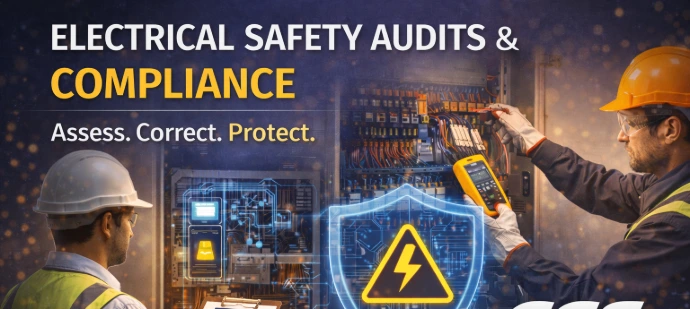
Regular electrical audits ensure systems comply with industrial safety regulations.
Compliance is not just a regulation — it protects lives and assets.
Introduction
Industrial electrical systems operate under high load conditions, complex distribution networks, and continuous operational demand. Over time, wear, environmental exposure, modifications, and load expansion can introduce hidden vulnerabilities into the system.
Regular electrical safety audits are essential to ensure that infrastructure remains compliant, reliable, and safe.
Compliance is not just about meeting regulations — it protects lives, assets, and business continuity.
What Is an Electrical Safety Audit?
An electrical safety audit is a systematic inspection and evaluation of an electrical system to assess:
Safety compliance
Operational reliability
Protection coordination
Load performance
Risk exposure
Documentation accuracy
It identifies potential hazards before they become serious failures.
Audits are preventive tools — not corrective reactions.
Detecting Hidden Risks
Many electrical risks remain invisible until failure occurs.
An audit helps detect:
Loose terminations
Overloaded circuits
Deteriorated insulation
Improper earthing
Protection device malfunction
Unauthorized modifications
These issues may not cause immediate breakdown but gradually weaken system reliability.
Early detection prevents catastrophic events.
Improving System Reliability
Audits enhance reliability by:
✔ Verifying load distribution
✔ Checking breaker coordination
✔ Inspecting panel health
✔ Reviewing thermal performance
✔ Confirming voltage stability
By identifying inefficiencies and stress points, audits help optimize system performance and reduce downtime.
Reliable systems are regularly evaluated systems.
Ensuring Statutory Compliance
Industrial electrical installations must comply with safety regulations and statutory norms.
Non-compliance can result in:
Legal penalties
Insurance claim rejection
Operational shutdown notices
Increased liability risk
Electrical audits verify that systems meet regulatory requirements and industry standards.
Compliance protects organizational integrity.
Strengthening Workplace Safety Culture
A safe electrical environment builds trust within the workforce.
Audits promote:
Awareness of safety protocols
Proper labeling and documentation
Safe panel access practices
Clear emergency procedures
Regular testing of protection systems
When safety becomes structured and documented, it strengthens workplace discipline.
Safety culture is built through consistent evaluation.
Financial & Operational Benefits
Electrical safety audits help reduce:
Emergency repair costs
Production downtime
Equipment replacement expenses
Energy inefficiency losses
Long-term infrastructure risk
Investing in audits is far more economical than recovering from electrical accidents.
Prevention is always less expensive than damage control.
Components of a Professional Electrical Audit
A comprehensive audit typically includes:
Load analysis review
Insulation resistance testing
Earth resistance measurement
Breaker functionality testing
Thermal scanning inspection
Surge protection verification
Documentation review
Risk assessment reporting
A structured audit provides actionable recommendations — not just observations.
Frequency of Electrical Audits
Audit frequency depends on:
Industry type
Load intensity
Infrastructure age
Regulatory requirements
Expansion history
High-load or high-risk environments may require more frequent inspections to maintain safety standards.
Regular review ensures long-term stability.
The GGS Engineering Perspective
At GGS Engineering Service, electrical safety audits are conducted with a systematic and compliance-driven approach.
Our process includes:
Detailed system inspection
Technical risk evaluation
Performance benchmarking
Compliance verification
Clear documentation and reporting
Corrective action recommendations
We treat audits as strategic evaluations — not routine paperwork.
Our objective is simple: protect people, protect assets, and protect performance.
Conclusion
Electrical safety audits are essential for maintaining industrial reliability and compliance. They detect hidden vulnerabilities, enhance performance, and reduce operational risk.
Compliance is not merely a regulatory requirement — it is a responsibility toward employees, infrastructure, and business continuity.
Industries that prioritize safety audits build stronger, more resilient operations.
Because safe systems are sustainable systems.