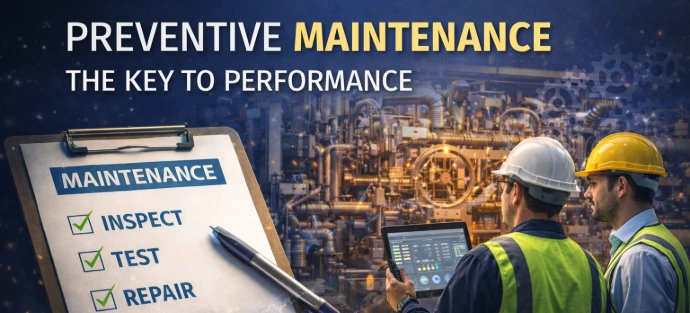
Even the best systems require regular inspection and maintenance. Preventive electrical maintenance helps to:
Identify loose connections
Detect insulation wear
Monitor load imbalance
Avoid sudden breakdowns
Proactive action is always more cost-effective than emergency repair.
Introduction
In industrial operations, performance stability depends not only on proper installation but also on consistent maintenance. Even the most advanced electrical systems require periodic inspection, testing, and preventive action to ensure uninterrupted operation.
Many industries focus on repair after failure. However, reactive maintenance is expensive, disruptive, and risky.
Preventive electrical maintenance is a structured approach to identifying potential issues before they become operational failures.
What Is Preventive Electrical Maintenance?
Preventive maintenance involves scheduled inspections and servicing of electrical systems to maintain performance and prevent unexpected breakdowns.
It includes:
Routine panel inspection
Thermal scanning
Load monitoring
Tightening of electrical connections
Insulation testing
Earthing verification
Protection device testing
The goal is simple: detect problems early and correct them before they disrupt operations.
Identifying Loose Connections
Loose electrical connections are one of the most common causes of:
Overheating
Voltage drops
Breaker tripping
Equipment malfunction
Vibration, thermal expansion, and regular usage can gradually loosen terminals.
Periodic inspection and tightening prevent arc formation and fire risk.
Small corrections today prevent major failures tomorrow.
Detecting Insulation Wear & Degradation
Over time, cable insulation can deteriorate due to:
Heat
Moisture
Mechanical stress
Chemical exposure
Damaged insulation increases the risk of short circuits and electric shock.
Insulation resistance testing helps detect early-stage degradation and ensures system safety.
Electrical health depends on insulation integrity.
Monitoring Load Imbalance
Unbalanced electrical loads create:
Overheating in one phase
Reduced motor efficiency
Increased energy consumption
Frequent tripping
Regular load analysis ensures balanced phase distribution and optimal system performance.
Load monitoring improves energy efficiency and reduces component stress.
Avoiding Sudden Breakdowns
Most electrical failures show warning signs before breakdown:
Temperature rise
Unusual noise
Discoloration of terminals
Voltage irregularities
Preventive maintenance identifies these signals early, allowing corrective action during planned shutdowns rather than emergency stoppages.
Planned intervention is always more controlled than sudden failure.
Financial Benefits of Preventive Maintenance
Reactive repairs often involve:
Emergency service charges
Production downtime
Overtime labor
Equipment replacement
Expedited spare parts
Preventive maintenance reduces these risks and stabilizes operational budgeting.
Proactive action is always more cost-effective than emergency repair.
Improving Equipment Lifespan
Well-maintained electrical systems experience:
Reduced overheating
Stable voltage supply
Lower component stress
Extended operational life
Consistent maintenance protects capital investment and reduces long-term replacement costs.
Performance longevity is achieved through disciplined upkeep.
Enhancing Workplace Safety
Electrical faults can cause:
Short circuits
Arc flash incidents
Fire hazards
Electric shock risks
Preventive maintenance ensures protective devices function correctly and grounding systems remain effective.
Safe systems protect both assets and people.
Structured Maintenance Planning
An effective preventive maintenance program includes:
✔ Scheduled inspections (monthly / quarterly)
✔ Load and thermal analysis
✔ Protection device testing
✔ Documentation and reporting
✔ Corrective action tracking
✔ Continuous improvement evaluation
Maintenance must be systematic — not occasional.
The GGS Engineering Approach
At GGS Engineering Service, preventive maintenance is treated as a strategic reliability program.
Our approach focuses on:
Detailed system evaluation
Performance monitoring
Early risk detection
Safety compliance verification
Long-term infrastructure optimization
We believe maintenance is not just servicing — it is performance protection.
Conclusion
Electrical systems are the backbone of industrial productivity. Without preventive maintenance, even well-designed systems gradually become vulnerable to failure.
Organizations that prioritize preventive action experience:
Fewer breakdowns
Lower maintenance cost
Improved safety
Longer equipment lifespan
Greater operational stability
Preventive maintenance is the key to sustained performance and reliable growth.
Reliable systems are not accidental — they are maintained.